In tracing these moments in the CCCS ’s history, his key point is to insist on a particular methodology for the pursuit of collective intellectual work. For him, the politics of necessarily continuous argument, in which conflicting principles and perspectives need to be debated acutely, can only work if proper attention is paid to the manners of “dialogic critical engagement” so that the participants can work through their differences without, as he graphically puts it, “eating each other.” This is no small matter, nor is it a merely superficial reflection of Stuart’s own impeccably courteous manners whenever engaging in critical debate. 10 In the previous chapter, he talked of the importance of holding on to the productive tension generated by the critical engagement in between culturalism and structuralism. Here, in a parallel form, his argument is for the necessity of holding on to Cultural Studies’ commitments to both theoretical and political questions. When he confesses his astonishment at the “theoretical fluency” of the form of Cultural Studies that he then saw taking off in the North American academy, his principal complaint is that this abstracted (and heavily “textualized”) form of cultural theory failed to demonstrate the “necessary modesty” of Cultural Studies as a contested, localized, and conjunctural form of knowledge. 11
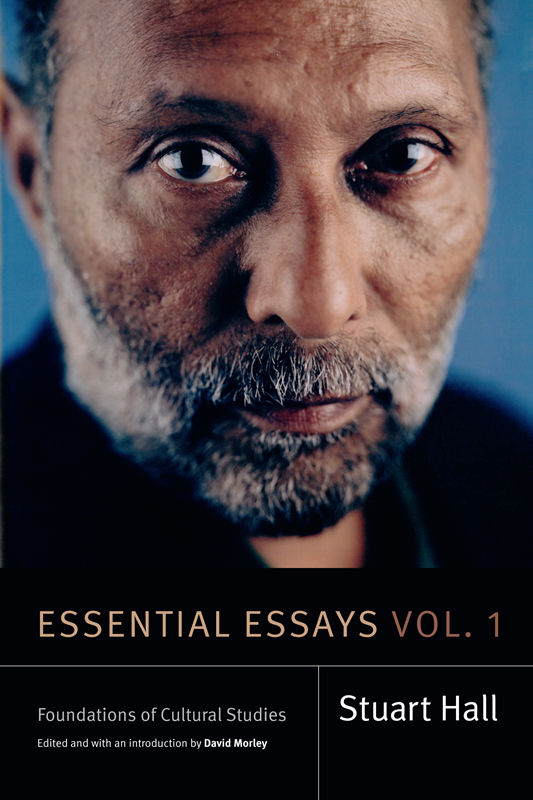
Hall, Stuart, Essential Essays, Volume 1, loc. 86332
However, in this chapter Stuart is more concerned. [fact]
Thompson) in opening up a more serious appreciation. [fact]
Here, in a parallel form. [fact]